Turning Organics Into Energy

Food waste makes up nearly 30% of our landfills.
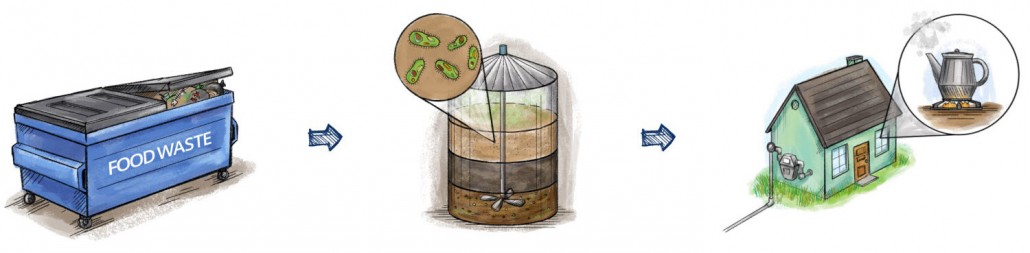
Food Waste Process Overview

An entity producing organic, biodegradable waste can divert material to anaerobic digestion. Good candidates for the program include: hotels, grocery stores, food & beverage manufacturers, cafeterias, restaurants, etc. Your business or organization can divert packaged & unpackaged food waste, including prepared food, fruit, vegetables, meat, dairy, and fats, oils & grease (F.O.G.). Through Momentum Recycling, you can divert your food waste from the landfill to Wasatch Resource Recovery resulting in considerable cost savings and long-term risk management.
FOOD WASTE COLLECTION + PROCESSING

Step 1: Separate Food Waste

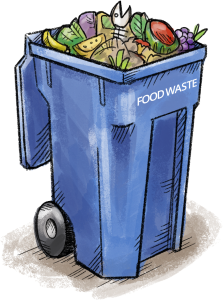
Food Waste Bin

Source Separated Organic Waste (SSOW) is placed in a designated collection container at your place of business.

Downward Arrow

Step 2: Collection + Delivery

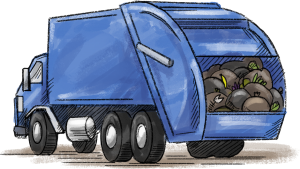
Food waste is collected by Momentum Recycling and delivered to the Wasatch Resource Recovery facility in North Salt Lake .

Food Waste Collection Truck
Downward Arrow

Step 3: De-Packaging

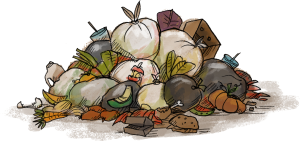
Food Waste

Food waste is tipped onto the floor of the de-packaging facility and processed by equipment that removes any contaminants or non-food material.

Basic Steps to De-Packaging Process:

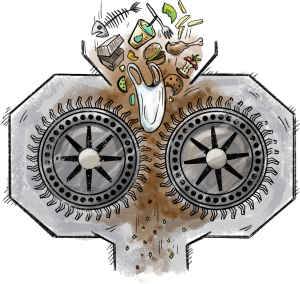
Food Waste Grinder
Food Waste Dissolver
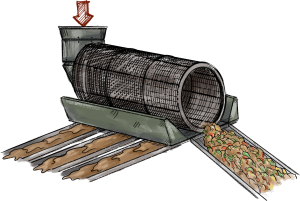
Food Waste Screener

Grind:  Food waste enters a grinder where it is chopped into small pieces.

Liquefy:  Secondary water is added to the ground-up food waste and mixed vigorously into a liquid state.

Screen:  The material passes through a rotating screen where any packaging or contaminants are washed free of remaining organic material and removed.

Downward Arrow

Step 4: Food Waste Digest

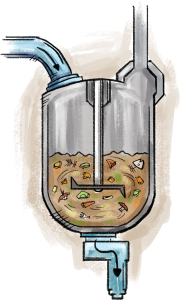
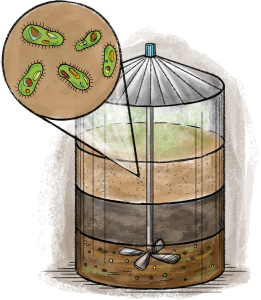
Organic waste in the digester is heated using the natural gas produced onsite to aid the growth of microbes. These microbes break down the organic matter further, without the use of oxygen, resulting in methane production.

Food Waste Digester
Downward Arrow

End-Use Products

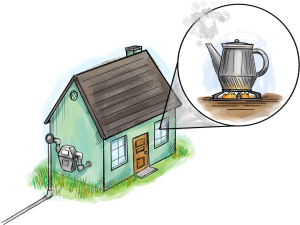
Residential Natural Gas Energy

Renewable Energy:  Methane is captured, scrubbed and compressed before it is converted into natural gas and fed into the municipal gas pipeline.  WRR will supply enough gas for approximately 40,000 people, a community the size of Bountiful, Utah.

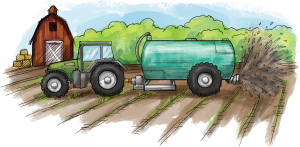
Farm Tractor

Fertilizer:  The remaining by-product is a nutrient-rich, carbon-based fertilizer, used to help local farms grow feed for livestock.

Wasatch Resource Recovery’s Food Waste
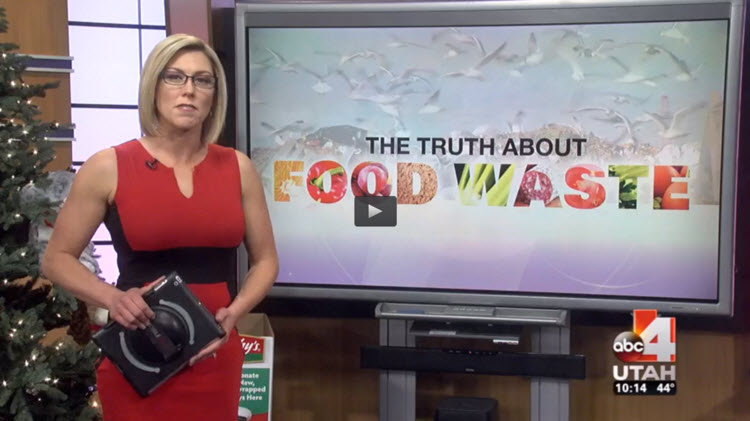
Solution Featured on KTVX

Utah’s first anaerobic digester will process organic & food waste to turn it into sustainable natural gas and fertilizer.  Click below to watch the video and then read the KTVX story.

ABC 4 News Coverage

FREQUENTLY ASKED QUESTIONS ON FOOD WASTE

Answer:  A digester, like its name suggests, functions like an animal’s digestive system. It breaks down food waste and turns it into natural gas and fertilizer. Anaerobic digestion takes place in an enclosed tank without oxygen where biological processes using microorganisms are used to breakdown biodegradable material. For more information about anaerobic digesters visit the Wasatch Resource Recovery website at www.wasatchresourcerecovery.com.

Answer:  Food waste, fats, oils and grease (FOG), and livestock manure are common feedstock.  Materials with high levels of fat, sugar and starch produce the most gas. Like a stomach, a digester cannot process metals, plastics, toxic materials or woody waste like tree branches.

Answer:  Not only is this project environmentally friendly, it also makes economic sense. Businesses which generate large quantities of food waste each year can pay lower tipping fees (on average 66% lower than typical landfill fees) which can lead to considerable cost savings. In addition to saving money, diverting material to an anaerobic digester will create multiple local jobs.

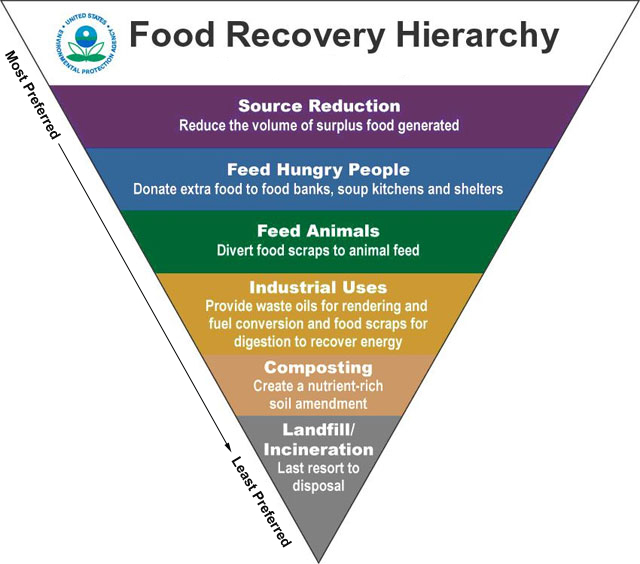
Answer:  The EPA has a recommended hierarchy for diverting food waste. While reducing waste and donating food to feed hungry people and livestock are considered the best uses for food waste, diverting food waste to a digester is preferable to large-scale industrial composting, landfilling and incineration because it produces bio-gas, which is a clean, renewable energy source as well as a nutrient rich fertilizer.

Food Recovery Hierarchy

The project utilizes an otherwise-wasted resource to produce a renewable source of energy and even without Renewable Energy Credits, the project is economically feasible. The agreement between ALPRO Energy & Water and South Davis Sewer District optimizes the use of existing, underutilized facilities.

Answer:  When biodegradable material breaks down in a landfill it produces methane gas. Many Utah landfills do capture methane and convert it to electrical power, however, landfill capture not as efficient and cannot collect 100% of it. Additionally, the generators powered by the methane are only about 35% power efficient. The remaining energy is lost to heat and wasted. With anaerobic digestion, 100% of the biogas produced is captured and turned into pipeline-grade natural gas and sold into the renewable energy market.

Furthermore, organic waste makes up 30% of landfill waste. Keeping food waste out of the landfill extends its life and helps keep tipping fees and garbage rates low for businesses and residents.

Answer:  When food waste ends up in a landfill it emits greenhouse gases like carbon dioxide, ammonia and methane. Methane alone is over 20 times more damaging to the atmosphere than CO2. Greenhouse gas emissions contribute to poor air quality and impact the health of Utahns along the Wasatch Front. We anticipate diverting enough food waste to the anaerobic digester each year, it will equate taking over 100 thousand cars off of the highway.

Answer:  Essentially any business that produces food waste can participate. Restaurants, grocery stores, hotels, caterers, conference venues, breweries, food processors and manufacturers, company cafeterias, hospitals, universities, residential care facilities, etc. can all benefit from the program.

Answer:  Depending on the volume of food waste produced, toters, dumpsters or self- contained compactors can be used for collection. Businesses can simply separate their food waste from recyclable and landfill waste by placing smaller collection containers in areas where food waste is produced. These containers can be emptied into the larger container– just like your garbage is – and will then be hauled to the digester by Momentum Recycling!

View our Food Waste collection services >>

Answer:  Wasatch Resource Recovery has state of the art equipment that can remove most contaminants – including plastic bags – so there is no real change in handling your food waste other than separation. Businesses can even place plastic containers of out-of-date yogurt, milk and other packaged food directly into their collection containers. Food waste can be collected in plastic bags to prevent odors and pests from becoming a problem. These bags and plastic material are screened out in the de-packaging process. If contaminants exceed 8% of the total load, a higher tipping fee is assessed.

Answer:  Because businesses are allowed to collect food waste in plastic bags, odors and pests shouldn’t be a problem. Your hauler will help you determine the most optimal frequency for service based on your volume and space needs.

Wasatch Resource Recovery Logo

Wasatch Resource Recovery (WRR) is the name given to the facility that is processing food waste and turning it into natural gas. WRR was formed through an agreement between ALPRO Energy & Water (ALPRO) and the South Davis Sewer District (SDSD). ALPRO is responsible for building and funding the equipment needed to process the food waste. The food waste will be fed into SDSD’s digesters, and finally, ALPRO will harvest, clean and sell the natural gas. SDSD currently processes sewage waste from Davis County using existing digesters at its facility and benefits from the project by becoming energy neutral and using the “waste heat” produced by the digesters for its processes.

Answer:  Wasatch Resource Recovery (WRR) expects to break ground in early 2016, and the anaerobic digester to be operational by early 2019. We are currently asking businesses to contractually commit to diverting their waste to WRR. These contracts will help us finance the project and prove to funders that there is enough feedstock and interest in the project to make it financially viable. Signing a contract committing to divert your food waste to WRR will control your risk and allow you to lock in a long-term lower tipping fee. If the project is not funded or built all parties are released from their contractual obligations.

Want to learn more about the food waste recycling services we can provide for your business or organization?  –  Click here to contact us!